Not sure why your vase looks lost on the shelf? This simple guide explains how to choose the right shape, size and finish, and how to style ceramic vases on mantelpieces, coffee tables, dining tables and open shelves for a calm, modern home.
You have found a vase you love, brought it home and put it on the sideboard. Somehow it looks lost. It is too small for the space, or it sits awkwardly next to the lamp, or it simply does not feel finished. This is one of the most common decorating frustrations, and the good news is that it is usually easy to fix.
Styling vases is less about rules and more about proportion, balance and a little restraint. This guide walks you through how to style ceramic vases around your home, from choosing the right shape to arranging a shelf that looks considered rather than cluttered.
Start with the right vase for the space
Shape
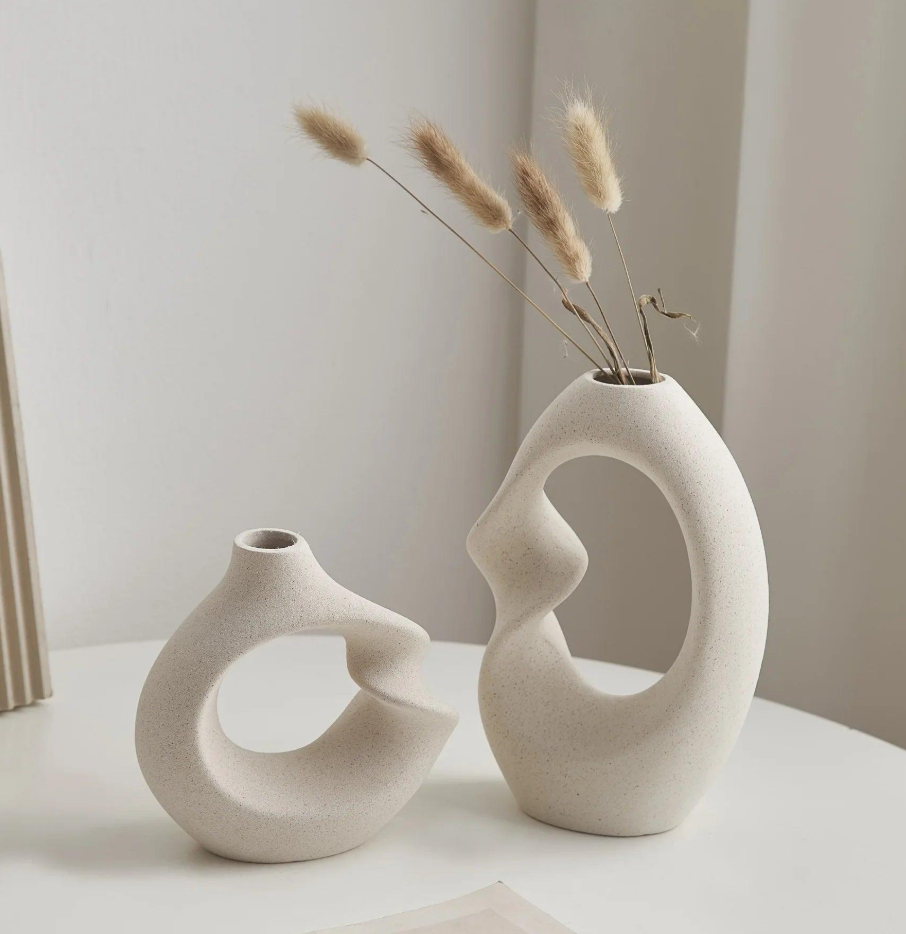
The shape of a vase sets the mood. Tall, slender forms draw the eye upwards and suit narrow spots such as hallway consoles or the corners of a mantelpiece. Rounded, bulbous shapes feel softer and work well on coffee tables, where they are seen from above. Sculptural vases with arches, loops or open centres can stand on their own as decorative objects, with or without stems.
Size
A helpful starting point is to match the vase to the surface it sits on. A small bud vase on a long dining table can disappear, while an oversized piece on a bedside table can feel crowded. Step back and look at the vase from across the room. If it reads as a deliberate choice from a distance, the size is probably right.
Colour and finish
Neutral ceramics in white, cream, sand and stone are the easiest to live with. They sit comfortably in most rooms and let flowers or foliage take centre stage. Black and deep earthy tones add definition and contrast, particularly against pale walls. A single coloured vase, such as mustard, terracotta or deep blue, can bring warmth to an otherwise quiet scheme.
Finish matters as much as colour. Matte and sandy glazes feel calm and tactile, while glossy finishes reflect light and suit brighter, more modern spaces.
Styling vases room by room
The mantelpiece
A mantelpiece is a natural stage. For a relaxed look, avoid perfect symmetry. Place a taller vase towards one end and balance it with a lower grouping or a framed print on the other side. Leave some empty space so each piece can breathe.
The coffee table
Keep it low and practical. A rounded vase with a few dried stems, set on a tray with a book or two, creates a tidy focal point without blocking conversation or the view of the television. Choose something stable that will not tip easily if the table gets busy.
The console or hallway table
Hallways are seen briefly, so height and contrast help. A tall vase paired with a lamp or a mirror gives the area structure. If the table is narrow, keep arrangements slim so they do not catch passing coats and bags.
The dining table
The golden rule is to keep the centre low enough for people to see each other across the table. A row of two or three small vases running down the middle often works better than one large arrangement. For special occasions, add fresh flowers and remove them once the meal is over.
Open shelves
Shelves benefit from variety. Mix vases with books, small bowls and plants, and vary the heights so the eye moves along the shelf. Grouping items in threes and leaving gaps between groups keeps things from feeling crowded.
One statement vase or a group?
A single statement vase works best when it has room around it. Choose a piece with an interesting silhouette or texture, place it on a clear surface and let it be the focus. This approach suits minimalist rooms and smaller spaces.
Groups create interest through contrast. When styling a cluster, choose vases in different heights and shapes but keep one element consistent, such as colour, glaze or material. Odd numbers, usually three, tend to look more natural than pairs. Place the tallest piece at the back or to one side and let the others step down in height.
Neutral tones, sculptural forms and texture
Neutral ceramics are versatile because they work with almost any interior. To keep a neutral scheme from feeling flat, focus on texture. Pair a smooth glazed vase with a rough, speckled one, or set a matte piece against a natural wood or linen surface.
Sculptural forms bring a modern, gallery-like quality to a room. Many look complete without flowers, which makes them a low-maintenance choice. Contrasting black and cream pieces placed side by side can create a striking, graphic effect.
Dried flowers or fresh?
Dried flowers, pampas grass and preserved stems last for months and suit relaxed, neutral interiors. Keep them away from direct heat and dust them gently with a soft brush or a hairdryer on a cool setting.
Fresh flowers bring colour and scent but need regular attention. Change the water every couple of days and trim the stems at an angle. Before using a ceramic vase for fresh flowers, check that it is watertight, as some decorative pieces are designed for dried stems only.
Common mistakes and how to avoid them
- Choosing a vase that is too small. Scale up, or group several smaller pieces together so they read as one arrangement.
- Lining everything up evenly. Vary heights and spacing for a more natural, lived-in look.
- Too many colours at once. Pick a simple palette of two or three tones and repeat them around the room.
- Overfilling the vase. A few well-chosen stems often look more elegant than a crowded bunch.
- Forgetting the surface. Use a coaster or tray under vases holding water to protect wooden furniture.
Frequently asked questions
How many vases should I put on a shelf?
There is no fixed number, but groups of three with space between them usually look balanced. Mix vases with books or small objects so the shelf does not feel like a display cabinet.
Can I use a vase without flowers?
Yes. Sculptural and textured vases are designed to be decorative in their own right. An empty vase with an interesting shape can be just as effective as a full arrangement.
What colour vase goes with a neutral room?
Cream, sand and white keep the look soft and cohesive. For contrast, add a black vase or one in a warm earthy tone to give the room a focal point.
How do I clean a ceramic vase?
Wipe the outside with a soft, damp cloth. For the inside, use warm water and a little washing-up liquid with a bottle brush, then rinse and leave it to dry fully. Avoid abrasive cleaners, which can scratch matte finishes.
Bring it all together
Good vase styling comes down to a few simple ideas: choose the right scale, vary heights, repeat colours and leave space. Start with one area, such as a shelf or the mantelpiece, and build from there.
If you are looking for a starting point, you can browse our collection of decorative ceramic vases or explore sculptural ceramic ornaments to pair with them.